

OCD specialist Austin Texas dark green tropical leaves representing depth oriented and biological OCD evaluation at The Anima Clinic

OCD Specialist in Austin, Texas Who Evaluates Beyond the Serotonin Model | Dr. Lauren Williams

Standard OCD treatment follows a predictable sequence. An SSRI is prescribed. The dose is increased. If response is partial, a second SSRI is tried. If that fails, an atypical antipsychotic is added. If that fails, the patient is labeled treatment resistant. That label is usually premature. At Dr. Lauren Williams in Austin, Texas, I evaluate the full biological and neurological architecture driving OCD. Not just the serotonin signal. The entire system.

Call to book an appointment (512) 766-3061 or fill out the form below.

Name
Sign up for news and updates
OCD specialist Austin Texas calming green leaves background symbolizing holistic and biological OCD evaluation approach at The Anima Clinic

Anxiety Treatment and Comprehensive OCD Evaluation

OCD is not a single entity. It is a final common pathway. Multiple biological systems can generate or sustain obsessive compulsive symptoms, and unless those systems are evaluated, treatment becomes a process of layering medications onto a problem that was never fully defined.

Serotonin reuptake inhibitors remain the first line pharmacologic treatment. The evidence base is strong. But 40 to 60 percent of patients do not demonstrate adequate response to SSRIs, and among those classified as responders, most continue to carry significant symptom burden. A 25 to 35 percent reduction in symptom scores qualifies as response in most clinical trials. That leaves the majority of patients partially treated at best.

The Biological Variables Driving Treatment Resistant OCD

Glutamate dysregulation, specifically elevated levels in corticostriatal circuits, has been documented in treatment naive OCD patients. Dopamine signaling abnormalities in the striatum are well established. Inflammatory markers have been found within the very brain circuits implicated in OCD. These are not theoretical findings. They are measurable variables.

Methylation status matters. MTHFR polymorphisms and related methylation cycle disruptions affect neurotransmitter synthesis, detoxification capacity, and inflammatory regulation. A patient with compromised methylation may respond poorly to standard pharmacotherapy not because the medication is wrong, but because the biochemical infrastructure required to metabolize and utilize it is impaired.

Autoimmune and infection variables matter. The link between streptococcal infection and acute onset OCD has expanded our understanding of immune mediated obsessive compulsive symptoms. Research demonstrates elevated rates of anti basal ganglia antibodies in both pediatric and adult OCD patients. A Swedish nationwide study of over 30,000 OCD patients found up to 43 percent increased risk of comorbid autoimmune disease. If infection and immune activation are never investigated, a treatable driver remains invisible.

Thyroid function matters. Autoimmune thyroiditis can amplify obsessive compulsive symptoms by destabilizing the anxiety circuits that OCD already exploits. If thyroid function is never fully evaluated, medication is fighting a biological headwind that was never identified.

What they say

WHAT DR. WILLIAMS' PRACTICE INTEGRATIVE PSYCHIATRY DOES

Dr. Lauren Williams provides advanced, root-cause-focused psychiatric care designed for individuals seeking more than symptom management—delivering personalized treatment that restores clarity, resilience, and long-term wellbeing.

Treatment Resistance Is Usually Evaluation Resistance

Most patients who arrive at my practice with treatment resistant OCD have had their OCD managed, not evaluated. They have been prescribed medications sequentially without anyone investigating why the medications are not producing expected results. At no point did anyone assess methylation, inflammatory load, gut integrity, hormonal cycling, or immune activation.

Comprehensive OCD treatment means identifying which pathways are driving the presentation in each individual patient, then building a treatment architecture that addresses the full system. This is not alternative medicine. This is what comprehensive psychiatric evaluation looks like when the evaluation is actually comprehensive.

patient consulting with therapist during comprehensive OCD evaluation at The Anima Clinic

Who This Evaluation Serves

I work with adults whose OCD has been treated but not resolved. Patients who are internally intense, private by nature, and skeptical of most practitioners. Patients who have a rich inner world and have been managing significant complexity without adequate clinical support.

If you have been treated for OCD and still sense that something structural was missed. If you want not only reassurance but genuine precision about what is driving your pattern. If you value frameworks that assess biology alongside psychology. This work may be relevant to you.

I maintain a small patient roster. Not all inquiries can be accommodated. That is by design.

Young woman talking during a therapy session with a mental health professional, sitting on a couch and gesturing while explaining her thoughts

OCD Specialist in Austin, Texas: Dr. Williams' Practice

Dr. Lauren Williams is located at Wild Basin II, 108 Wild Basin Rd S Suite 250, Austin, TX 78746. I also serve patients across Texas through telehealth. If you are seeking an OCD specialist in Austin, Texas who evaluates the full biological architecture driving your OCD rather than cycling through medications, Dr. Lauren Williams offers comprehensive evaluation. You may request evaluation by calling (512) 766-3061 or completing the intake form.

OCD Specialist: Frequently Asked Questions

How is OCD treated?

OCD is treated through a combination of therapy, medication, and practical strategies. Cognitive-behavioral therapy, especially exposure and response prevention, is considered the most effective approach. In some cases, medication may be prescribed to help manage intrusive thoughts and compulsive behaviors. Treatment is tailored to each individual and adjusted over time to ensure lasting symptom relief and improved daily functioning.

What age does OCD usually start?

OCD can begin at any age, but it most commonly appears in childhood, adolescence, or early adulthood. In many cases, symptoms first show between ages 10 and 20, though mild signs can appear earlier and may go unrecognized until they start affecting daily life. Early recognition and support can improve long-term outcomes.

Can I have a normal life with OCD?

Yes, people with OCD can lead a full and balanced life. Effective treatment, including therapy and, if needed, medication, helps manage symptoms so they no longer control daily activities. With support and practical strategies, individuals can pursue their goals, maintain relationships, and enjoy a stable, meaningful life.

How does OCD develop?

OCD develops from a combination of genetic, neurological, and environmental factors. Differences in brain chemistry and function, family history of the disorder, and stressful or traumatic experiences can all contribute to its onset. While the exact cause is not fully understood, these factors interact to create patterns of intrusive thoughts and compulsive behaviors that define the condition.

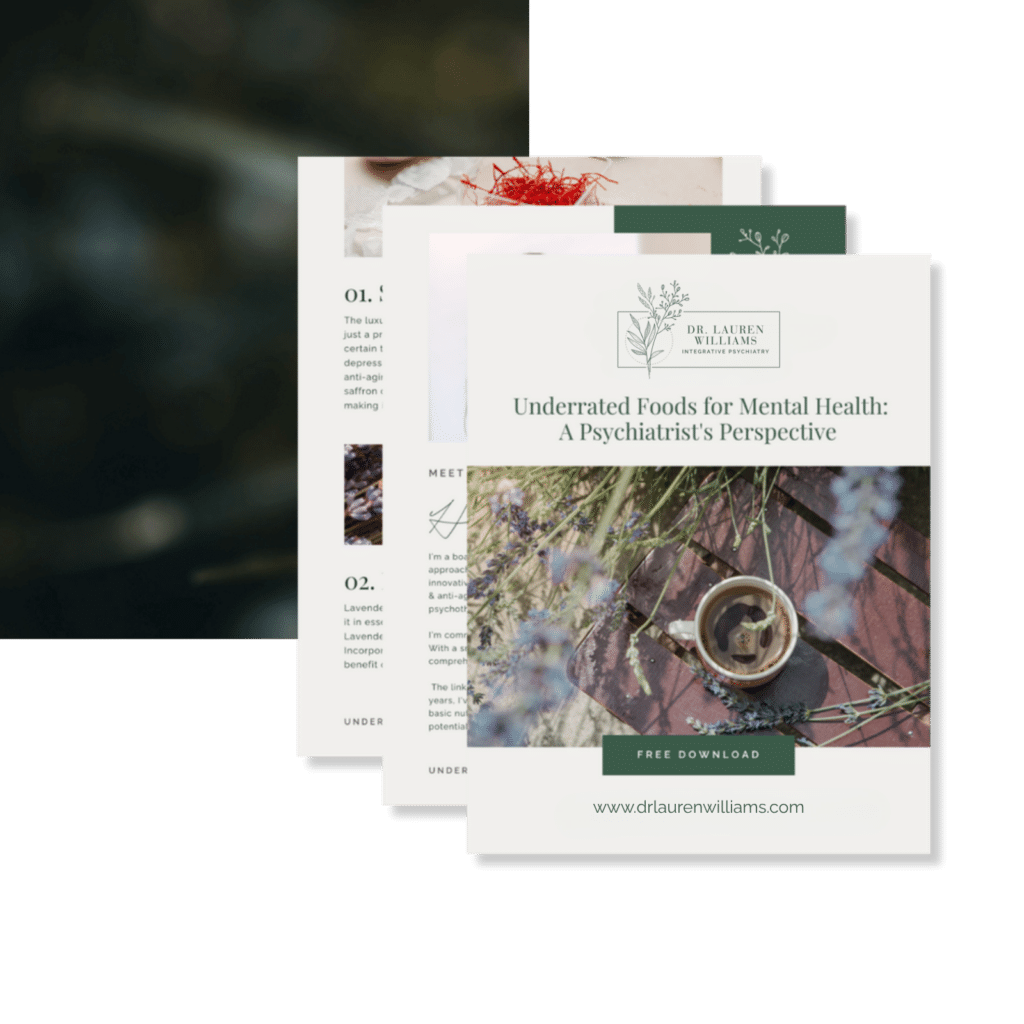
Dr. Lauren Williams Free Download
Free download

Underrated Foods for Mental Health: A
Psychiatrist’s Perspective

Virtual First. Serving All of Texas

Dr. Lauren Williams is a virtual first practice based in Austin, Texas, serving patients across the state. Comprehensive psychiatric evaluation does not require a physical office. It requires time, precision, and a provider who thinks in systems.

If you have been treated for years and still sense something structural was missed. If you appreciate diagnostic precision and frameworks that integrate biology with psychology. You may request evaluation. Dr. Lauren Williams , Austin, Texas. Dr. Lauren Williams, board certified psychiatrist.